



Few things can ruin a journey faster than a flat tyre. Whether you're commuting to work, heading off on holiday, or simply running errands, a puncture can leave you stranded and frustrated. Modern vehicles now offer several solutions for dealing with tyre emergencies, with spare tyres, tyre sealants, and inflation kits being the most common options.
Understanding the differences between these systems can help drivers make informed decisions and stay prepared for the unexpected.
The Traditional Spare Tyre
For decades, the spare tyre was a standard feature in almost every vehicle. A spare tyre allows drivers to replace a damaged tyre and continue their journey with minimal delay.
There are typically two types of spare tyres:
Full-Size Spare Tyre
A full-size spare is identical or very similar to the vehicle's regular tyres. It can usually be driven on without restrictions and offers the same performance and safety characteristics as the other wheels.
Advantages:
- Provides a complete replacement for a damaged tyre.
- No speed or distance limitations.
- Suitable for long journeys.
Disadvantages:
- Takes up valuable boot space.
- Adds weight to the vehicle, which can affect fuel efficiency.
- More expensive for manufacturers to include.
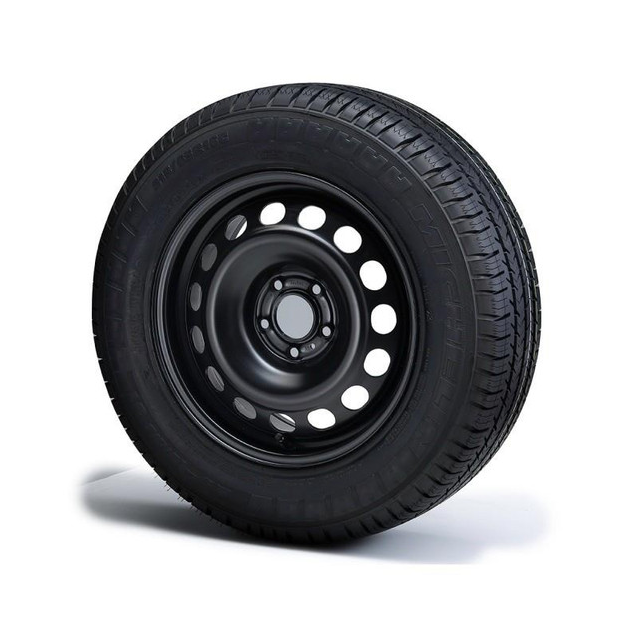
In recent years, you are more likely to see a full-sized spare wheel on a van rather than a car.
Genuine Vauxhall Vivaro Life - 16" Spare Wheel
Space-Saver Spare Tyre
Often called a "temporary spare" or "donut," a space-saver spare is smaller and lighter than a standard wheel.
Advantages:
- Saves space and weight.
- Less expensive than a full-size spare.
Disadvantages:
- Usually limited to speeds of around 50 mph (80 km/h).
- Intended only for short-term use.
- Can affect vehicle handling and braking performance.
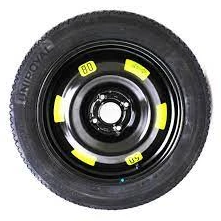
A good example of these for Vauxhall is:
Genuine Vauxhall Astra L (2022-Present) - 16” Emergency Spare Wheel
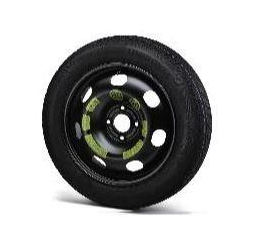
Genuine Vauxhall Corsa F - 15" Space Saver Spare Wheel
Tyre Sealant Kits
As manufacturers strive to reduce vehicle weight and improve fuel economy, many new cars are now supplied with tyre sealant kits instead of spare wheels.
A tyre sealant kit typically contains a bottle of sealant that is injected into the tyre through the valve. The sealant is designed to plug small punctures and prevent air from escaping.
Advantages:
- Lightweight and compact.
- Frees up boot space.
- Easy to store and use.
Disadvantages:
- Only works on certain types of punctures.
- May be ineffective if the tyre has suffered sidewall damage.
- Can make tyre repairs more difficult.
- Often requires the tyre to be replaced after use.
Tyre sealants are generally intended as a temporary solution to get drivers safely to a garage rather than a permanent repair.
Many aftermarket sealant kits are available for sale as universal versions of sealant kits, but for owners who are after a genuine sealant kit, there are options available. For example, the following options are made as genuine options:
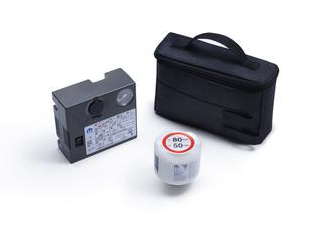
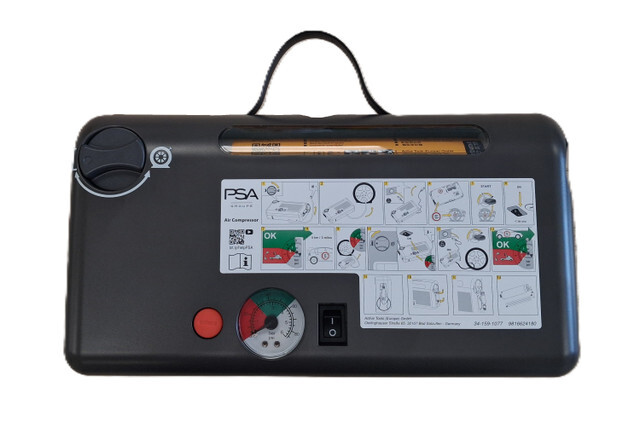
Genuine PSA Tyre Sealant & Compressor Kit for Vauxhall, Peugeot, Citroen, DS All Models of Car
Which Option Is Best?
The best solution depends on the driver's needs and vehicle type.
A spare tyre remains the most reliable option because it allows a damaged tyre to be replaced completely. However, the additional weight and space requirements have led many manufacturers to favour tyre sealant and inflation kits.
For urban drivers who rarely travel long distances, a tyre mobility kit may provide sufficient peace of mind. Drivers who regularly undertake long journeys, travel in remote areas, or frequently drive on rough roads may prefer the security offered by a spare tyre.
Staying Prepared
Regardless of which system your vehicle uses, preparation is essential.
Drivers should:
- Check tyre pressures regularly.
- Inspect tyres for signs of wear or damage.
- Familiarise themselves with the equipment supplied with their vehicle.
- Ensure tyre sealant kits are within their expiry date.
- Know where the spare tyre, jack, and wheel tools are stored.
A few minutes spent preparing can make a significant difference when faced with a roadside puncture.
Final Thoughts
Flat tyres remain one of the most common motoring problems, but today's drivers have more options than ever before. Spare tyres provide the greatest level of security, while tyre sealants and inflation kits offer lightweight, space-saving alternatives that can help get a vehicle moving again after a puncture.
Whichever solution your vehicle uses, understanding how it works before an emergency occurs can help you stay safe, minimise inconvenience, and get back on the road with confidence.